Borusan Contemporary,
is a contemporary art, collection and education initiative of the Borusan Kocabıyık Foundation.
Personal Data Protection
Cookie Policy
© Borusan Contemporary, 2026.
Blog
An Uneasy Beauty
16 February 2026 Mon
NAZ KOCADERE ULU
nazkocadere@gmail.com
Frankly speaking, I kept my distance from the concept of landscape in art history and topographic photography for a long time. I thought that landscape painting and nature photography often offered a romanticized, one-dimensional aesthetic field devoid of any courage and political acuity. Presenting nature as a “beautiful” surface indicated a representational regime wherein human intervention was either rendered invisible or deliberately aestheticized. For this reason, landscape remained an apolitical genre for me for a long time.
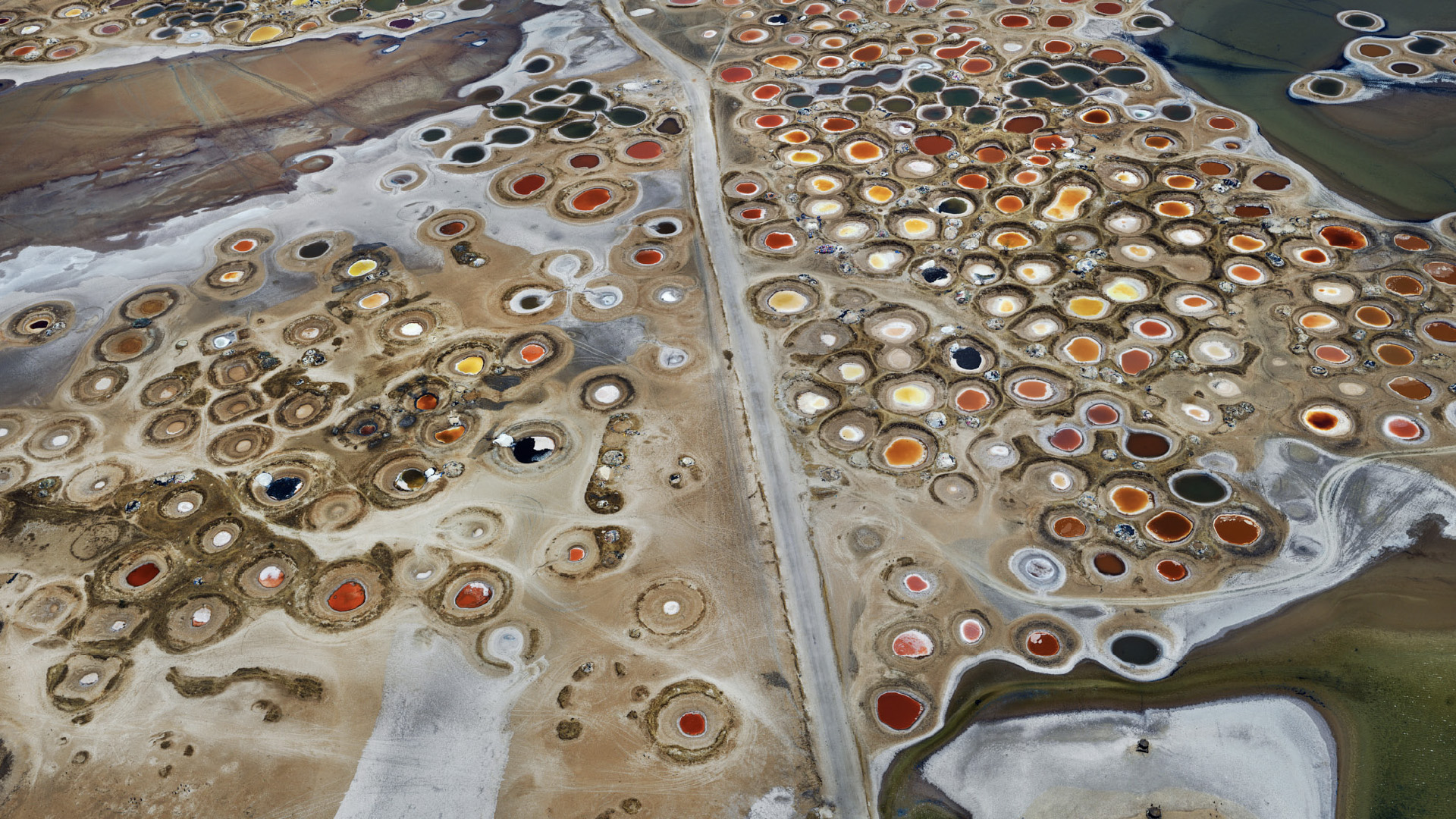
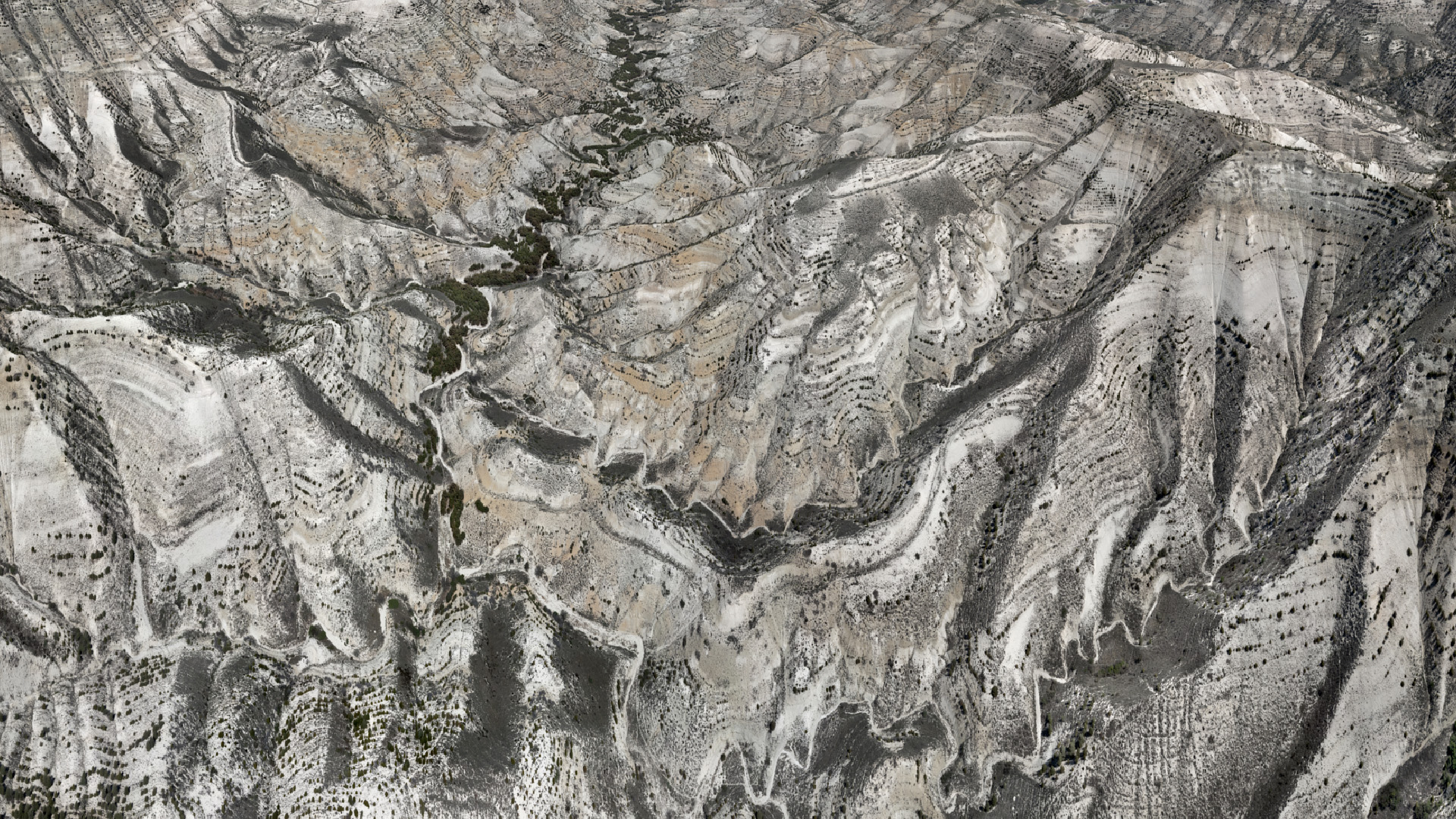
What I’ve recently read on the occasion of Edward Burtynsky’s exhibition, Shifting Topography, helped me break that preconception. Curated by Marcus Schubert, Burtynsky’s first major exhibition in Türkiye showcases photographs the artist has taken across Türkiye and all around the world. On special invitation by the Borusan Contemporary Art Collection, the artist and his team captured detailed aerial photographs of Türkiye’s Central Anatolia and Mediterranean regions using drones and helicopters. The photographs focused on this text include the terracing created for erosion control in Yeşilhisar, Kayseri; the “Salt Lake” series; and landscapes ranging from Burdur’s Lake Yarışlı to the fields of Kırşehir, from the Göksu River Valley in Karaman to the badlands of Nallıhan.
Landscape in art history is not only a way to represent nature⎯it is also the visual expression of a worldview, a conception of property, and a network of power relations. As theorist of photography and educator Liz Weiss emphasizes, landscape photography does not simply show a place; it also indicates how we relate to that place. 1 For this reason, modern landscape photography is a visual field intertwined with culture, identity, and environmental politics⎯and it cannot be considered innocent.
Photography, particularly since the 19th century, has come to represent nature as a surface that can be measured, classified, and therefore “utilized.” The earth has been recontextualized as an economic and strategic resource, rather than a mere aesthetic object. The landscapes in Burtynsky’s photographs do not offer a representation of “nature” in the classical sense. Rather, they render visible nature transformed by human hands, revealing the marks and the scale of industrial intervention. These photographs are neither fully documentary nor purely aesthetic abstractions. They stand on a threshold before the two⎯on a space that provokes uncertainty.
Viewed from a distance, the photographs may appear almost like abstract paintings. Gradations of color, surface textures, and compositions draw the viewer in. On closer inspection, however, dried-up lake beds, cracked terrain, traces of erosion, and industrial devastation emerge from this seemingly “beautiful” surface. For this reason, Burtynsky’s photographs carry a kind of uneasy beauty⎯the simultaneous experience of beauty and latent anxiety. Reminiscent of postcard imagery, these landscapes⎯stripped of the textured memory of nature⎯produce a surface that feels almost fictional.
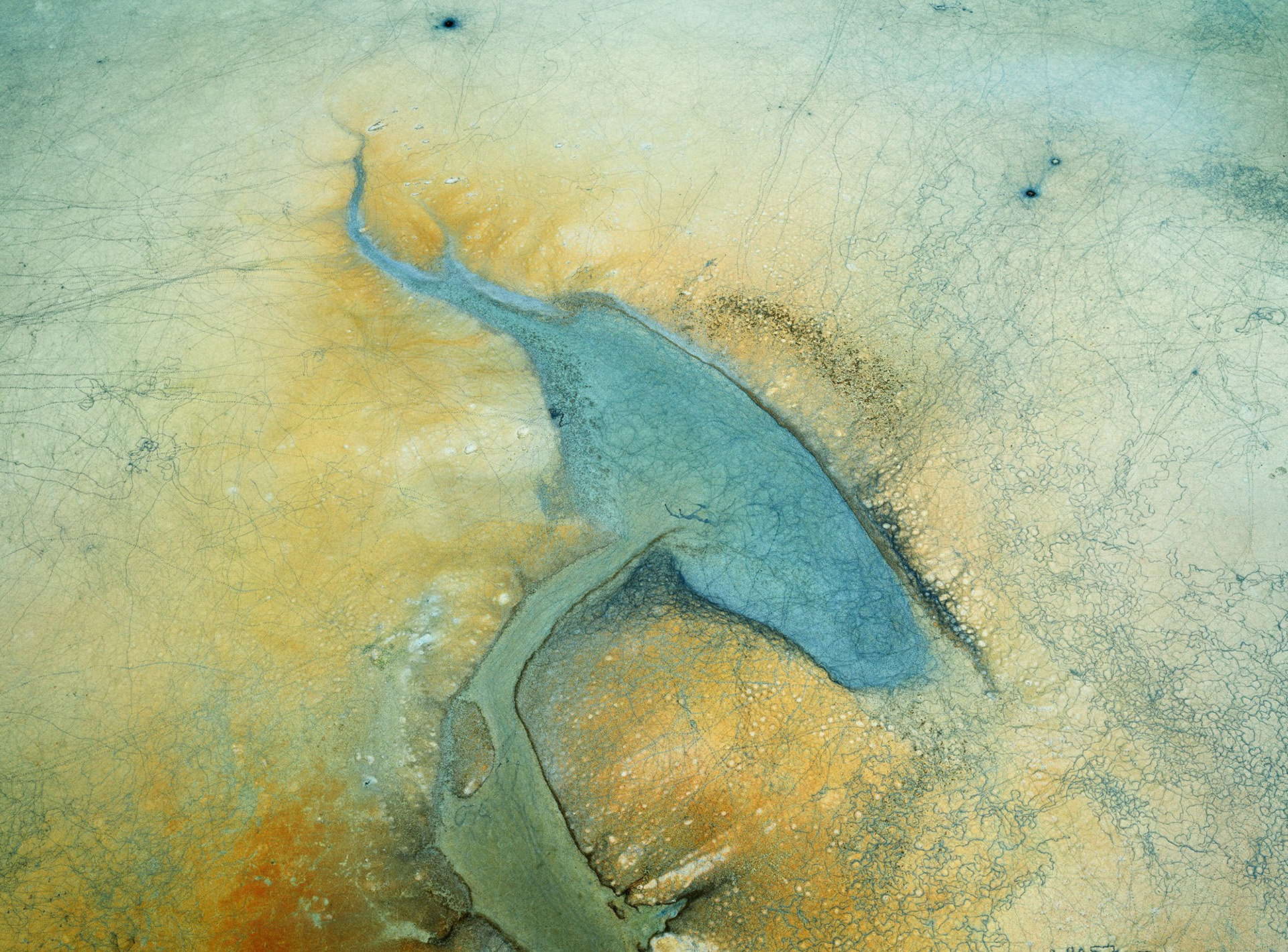
Edward Burtynsky, Salt Lakes #6, Bird Tracks, Lake Yarışlı, Burdur, Türkiye, 2022
Borusan Contemporary Art Collection
The large-scale photograph, depicting Lake Yarışlı in Burdur, was taken from several hundred meters above the ground. A body of water tinted blue is visible within the frame; yet the surface surrounding it appears dry, cracked, and in yellowish-brown tones. Fissures that spread like fine veins resemble roads on a map or the human vascular system. As stated in the exhibition catalogue, Lake Yarışlı is a vital stopover site for more than 150 bird species migrating between Europe and Africa. The footprints of these migratory birds create web-like patterns across the surface⎯which are erased with seasonal rainfall, only to reappear. However, overgrazing, deforestation, and surface runoff from nearby marble quarries have increased sedimentation in the lake, rendering this ecosystem increasingly fragile.
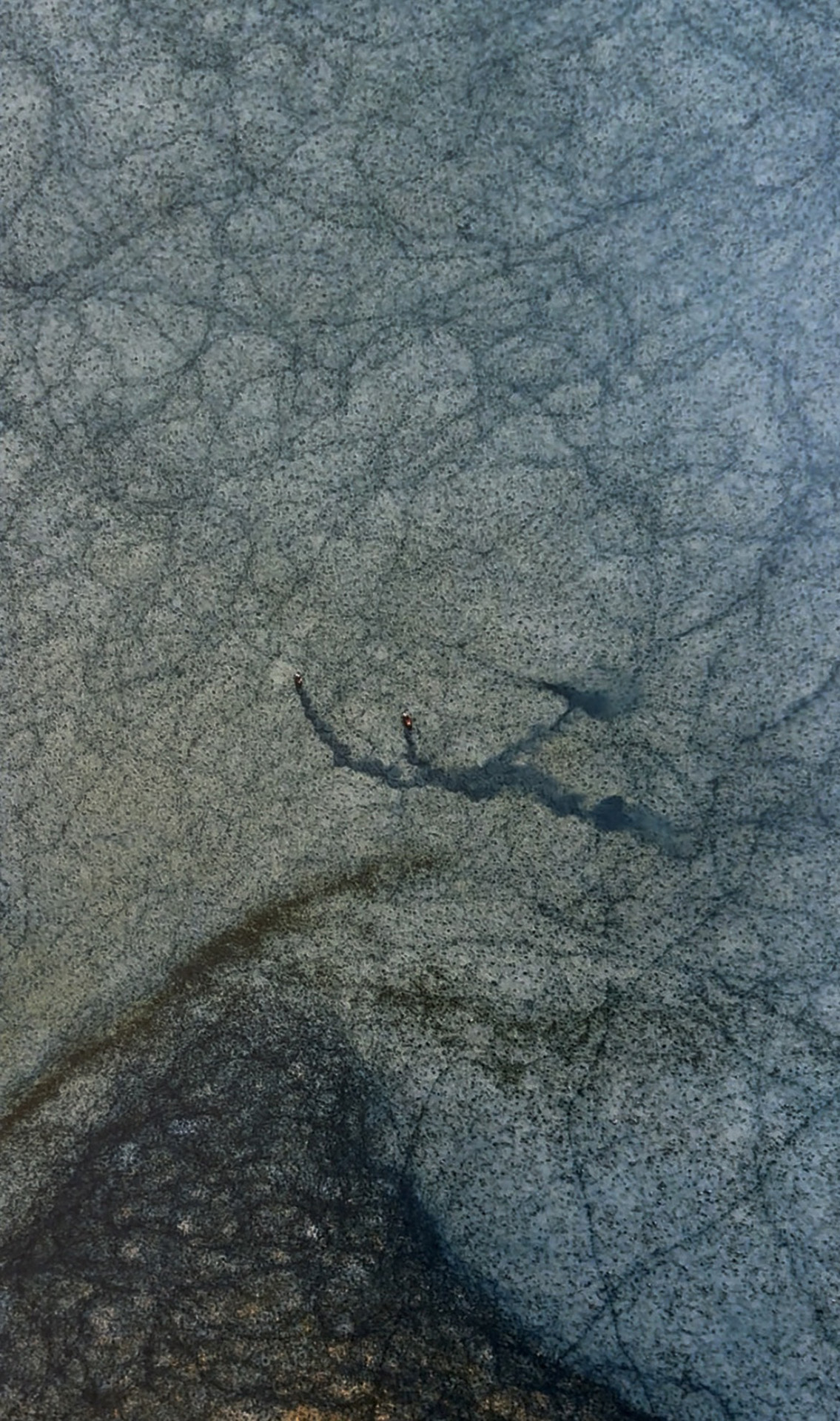
Edward Burtynsky, Salt Lakes #4, Southwestern Lake Tuz, Gölyazı, Konya Türkiye, 2022
Courtesy of the artist and the Flowers Gallery, London
This image is a close-up detail taken from the previous photograph. At first glance, it resembles the cracked surface of an oil painting. Shades of light grey, beige, and pale blue all blend together. But these fissures are not paint⎯they are fragments of dried earth. The surface is rough, hard, and brittle; the dark lines in between suggest the water once present here. This detail speaks to how parched and weary the land has become.
As art historian Dr. Stephanie O’Rourke has pointed out in a podcast moderated by the philosopher and historian of art, Vid Simoniti, landscape in the Western tradition is not merely a genre, but also a “way of seeing.” 2 This way of seeing transforms the land from environment into “terrain,” i.e., a resource. O’Rourke notes that 19th-century colonial landscape paintings present nature as an economically “extracted” entity. 3 In the 1800s, parallel with European industrialization, French landscape paintings of North Africa seem to depict images of an untouched, romantic nature at first glance; but the waterways hidden in the frame suggest that these trees and land could be converted into economic resource.
The concept of “raw material” reduces land to mere potential economic value by erasing its historical, cultural, and ecological context. Burtynsky’s photographs draw attention precisely to these erased contexts: The land is present, but the people who belong to it are absent; traces remain, but the subject itself is invisible. Burtynsky’s aerial shots, produced via drone and helicopter photography, are not merely the results of a technical choice; they carry symbolic meaning. The bird’s eye view has historically been associated with power, control, and domination. Maps, military reconnaissance, and colonial planning have all relied on this perspective.
Art critic, writer, and theorist Susan Sontag has argued that photography scales, shrinks, and reorganizes the world. Aerial photography reduces nature to a manageable surface to the human eye. Yet in Burtynsky’s work, this perspective also unveils a crime scene. According to Sontag, photography functions both as evidence and as interpretation: “A photograph passes for incontrovertible proof that a given thing happened.” 4 While Burtynsky’s photographs fulfill this function of testimony, they simultaneously present an abstracted version of reality. This abstraction invites the viewer to maintain their aesthetic distance⎯but that distance, in turn, triggers an ethical inquiry.
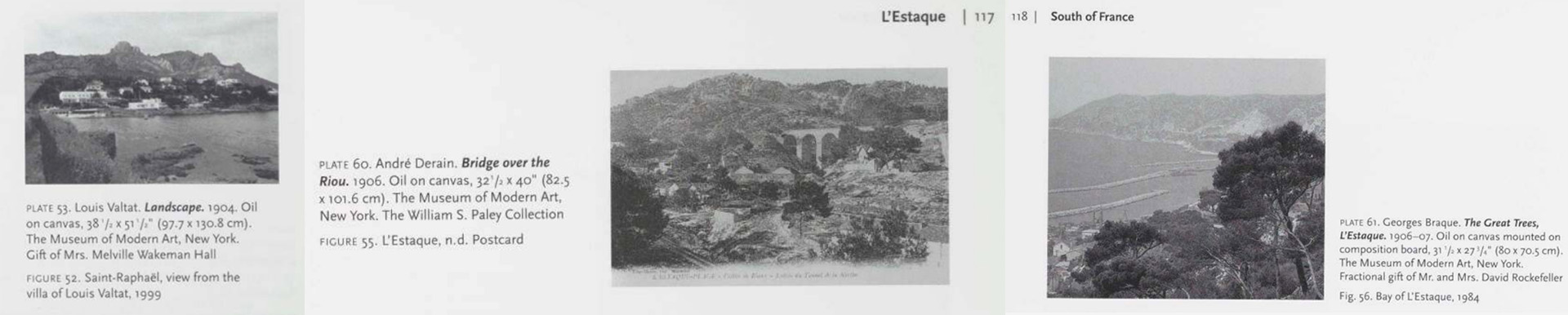
French landscape : the modern vision, 1880-1920 Magdalena Dabrowski, The Museum of Modern Art: Distributed by H.N. Abrams, 1999
https://assets.moma.org/documents/moma_catalogue_3062_300198569.pdf
The painter Paul Klee, who witnessed the intense political and social upheavals the world experienced between the two world wars at the beginning of the 20th century, once said: “The more terrifying the world becomes, the more art becomes abstract.” 5 This statement also elucidates Burtynsky’s works in the exhibition. Abstraction here is not an escape, but a way of confronting reality. There is no human figure within the frame; yet this does not indicate the absence of human impact, but rather its pervasive presence everywhere. In Burtynsky’s photographs, humans are like ghosts⎯they are invisible, but influential. This ghostliness implies that extraction processes displace not only natural resources but also communities.
Marks of a modern paradigm of development, which views land solely as a “resource” are clearly visible in the photographs. This approach marginalizes rural communities from decision-making processes while rendering nomadic ways of life obsolete. Yet nomadic communities like the Sarıkeçili Yörüks demonstrate that a harmonious and reciprocal relationship with nature is still possible. As articulated by Dilşad Aladağ in her Yield project, development ideals shaped from the early Republican period onwards positioned the countryside as a passive resource, and blocked the path to a sustainable environmental awareness. 6 By contrast, community-based initiatives such as Geççi remind us that nomadic pastoralism offers an alternative model⎯one that preserves biodiversity and plays a significant role in combating the climate crisis. 7
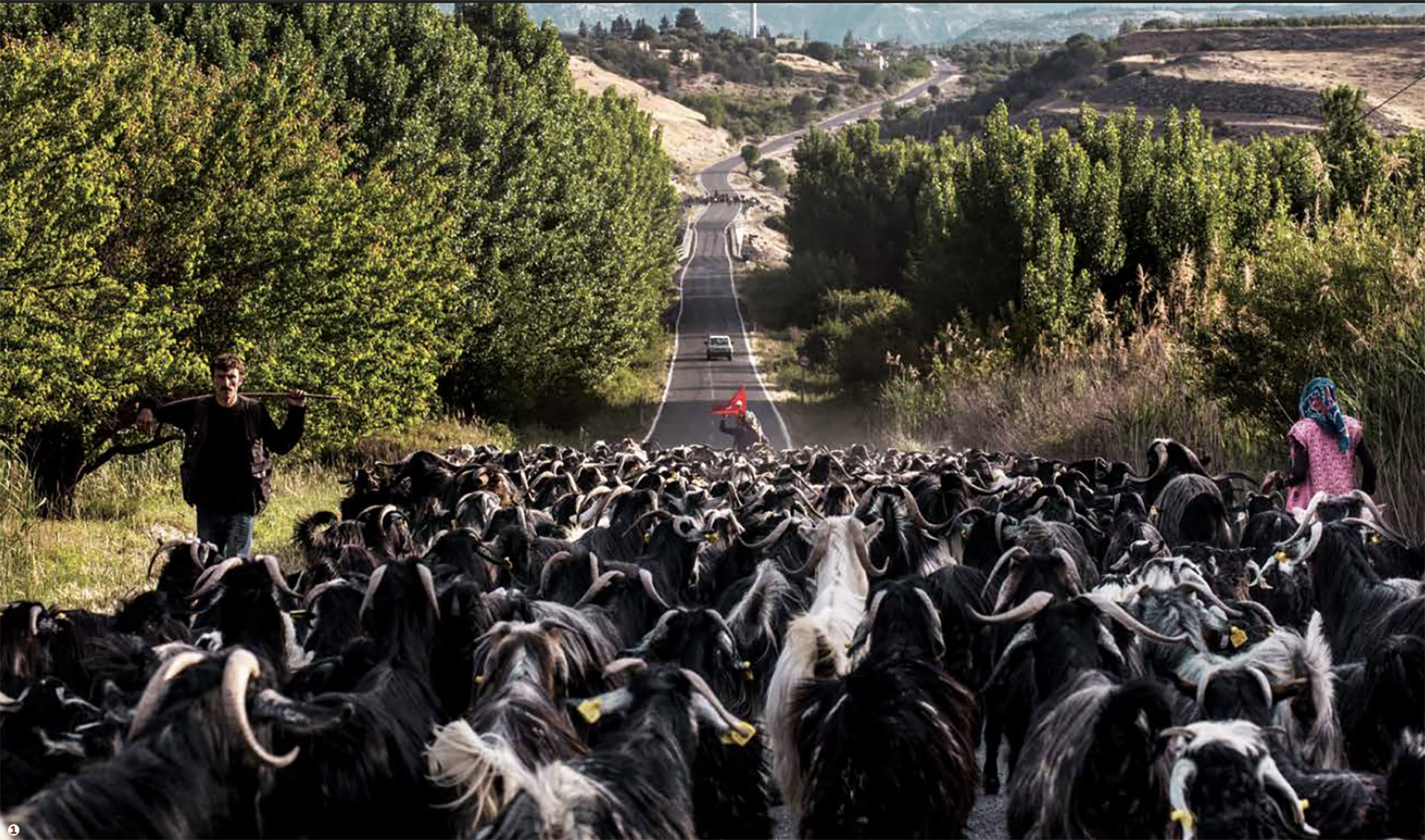
SARIKEÇİLİLER: INFINITE MIGRATION, Text: Güven Eken, Photographs: Mahmut Koyaş, MAGMA magazine August 2015, pg. 81
The fact that precipitation levels in Türkiye and the region have stayed below seasonal norms for a long while further reveals the contemporary consequences of this historical rupture. Drought is not merely a downturn in rainfall⎯it amounts to a systemic crisis that simultaneously affects agriculture, food production, and cities through the drying of the soil and groundwater depletion. Intensive and water-consuming agricultural policies that have replaced nomadic knowledge systems have led to sudden geological consequences⎯such as and especially the sinkholes in Central Anatolia. Sinkholes emerge when lacunae that remain invisible for a long time suddenly collapse; much like the damage that has accumulated beneath the surface and became perceptible only when viewed from a distance in Burtynsky’s photographs.
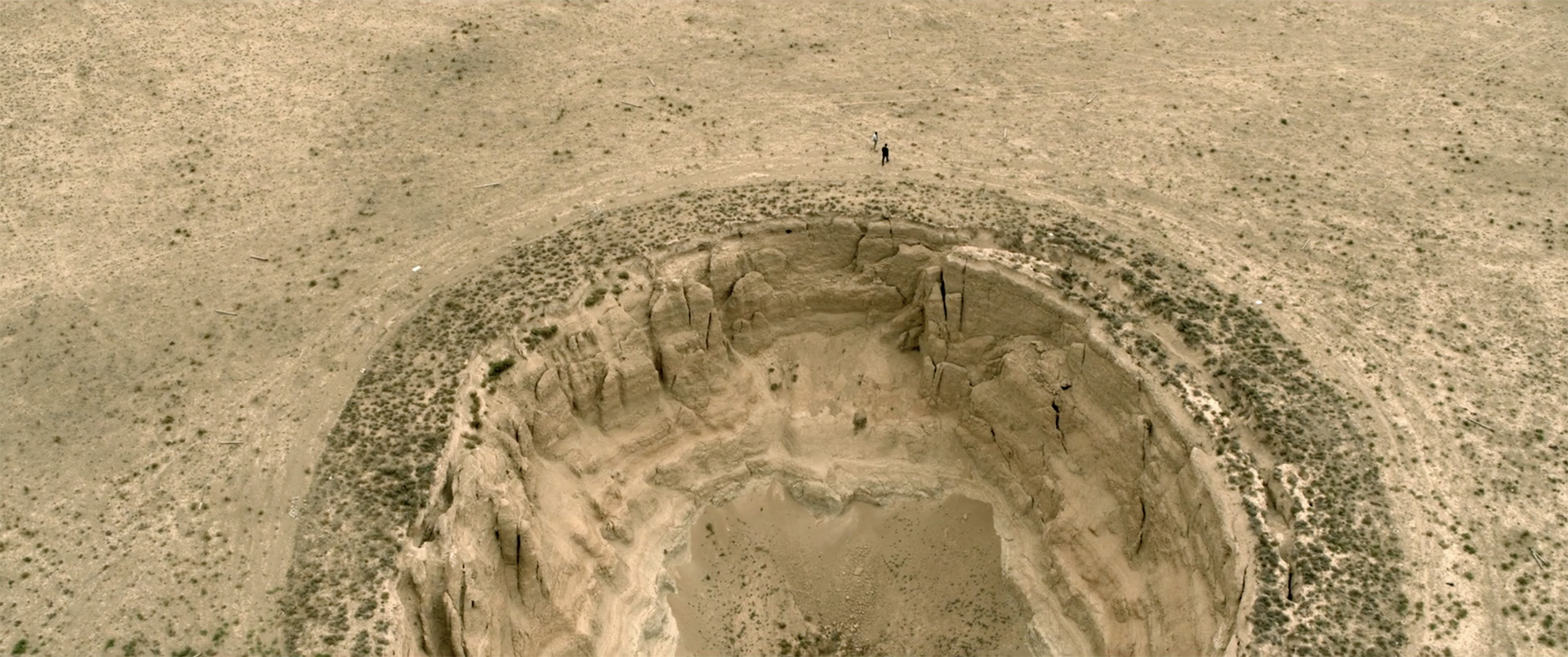
Burning Days, screenshot from movie trailer, Director: Emin Alper (2022), Cast: Selahattin Paşalı, Ekin Koç, Erol Babaoğlu Country: Türkiye, Distribution: Bir Film, Production: Ay Yapım, Liman Film
At this juncture, I would like to briefly mention the film Burning Days (2022), which I believe will deepen the contextual framework of this text. Directed by Emin Alper, the film addresses this ecological fragility not only as an environmental fracture but also as a social and political one. In the film, the sinkhole is at once a physical and symbolic center; as in Burtynsky’s photographs, humans are not directly visible, but their impact is seen everywhere. In this respect, Burning Days can be read as a narrative counterpart to the catastrophe implied in Burtynsky’s abstracted landscapes.
As Vid Simoniti points out with reference to Iris Murdoch, our tendency to evade the climate crisis rests on an emotional threshold similar to our avoidance of the idea of mortality. 8 Burtynsky’s photographs do not so much block this evasion directly as suspend it; by placing the viewer within an aesthetic distance, they call us to notice the tension between what is visible on the surface and what remains hidden. But a risk is also present: The possibility that the aesthetic experience might turn the catastrophe into something “viewable.” Burtynsky’s works do not loudly proclaim a sense of urgency⎯rather, they slow down the viewer’s gaze and leave them to reflect on the relationship they form with the landscape they see. What remains after leaving the exhibition is less a definitive answer or call to action than an unsettling mark these images leave in memory. Whether this feeling will translate into action is ultimately up to the viewer.
1- Liz Wells, Land Matters: Landscape Photography, Culture and Identity, London: I.B. Tauris, 2011, pp. 19−58.
2- 4th episode of the podcast Art Against the World, presented by philosopher and historian of art, Vid Simoniti, during the 13th Liverpool Biennial in 2025. https://www.biennial.com/event/art-against-the-world-podcast/.
3- Stephanie O’Rourke, Picturing Landscape in an Age of Extraction: Europe and Its Colonial Networks, 1780-1850, Chicago: University of Chicago Press, 2025.
4- Susan Sontag, On Photography, Dell Publishing Company, 1977, p. 5.
5- Paul Klee, Watercolors, Drawings, Writings, trans. Norbert Guterman, New York: Harry N. Abrams, Inc., 1969, p. 17.
6- Dilşad Aladağ, Mahsul [Yield] Project, 2022 – ongoing. https://mahsul.info/. Excerpt taken from the 38th episode of the ‘Ortaklaşa Mekan’ series, co-presented by Melis Oğuz Çevik and Duygu Toprak, on the ‘Mekan ve İnsan’ program broadcast on the Medyascope Youtube channel. https://www.youtube.com/watch?v=NYJpgSKm3NQ/
7- Geççi is a community-based social enterprise of the Sarıkeçili people, who live by nomadic animal husbandry in the Taurus Mountains. https://gecci.org/
8- Vid Simoniti, Artists Remake the World: A Contemporary Art Manifesto, New Haven and London: Yale University Press, 2023, p. 129.
ABOUT THE WRITER
Naz Kocadere Ulu works as an arts manager, curator and writer in the arts and culture field. With a keen eye on the ever-changing structure of language, Naz focuses on its relationship with identity, cultural belonging, representation, gender and authority. With a background in visual communication design, Naz received her master’s degree in cultural management. During her graduate studies, Naz focused on the strategies of audience development at SALT Istanbul and Kunstinstituut Melly Rotterdam. Later, she attended the Curatorial Program at de Appel Amsterdam with the support of the SAHA Association. Since 2013, Naz has realized a series of publications, exhibitions and research programs in various art galleries and institutions, including SALT in collaboration with the platform Asociación de Arte Útil and the 13th Istanbul Biennial. Recently, as part of her curatorial fellowship supported by the Cultural Foundation of Saxony (KdFS), she curated the group exhibition Outspoken Voices beyond the Archive at Galerie für Zeitgenössische Kunst (GfZK) in Leipzig, Germany.
Her latest curatorial projects include multifaceted publication “What are the words you do not have yet?” supported by Amsterdams Fonds voor de Kunst (AFK), and the group exhibition All water falls into language supported by the Consulate General of the Netherlands in Istanbul. Her writing has previously appeared in Sanat Dünyamız, Art Unlimited, Argonotlar, Borusan Contemporary Blog and SALT Online Blog. Naz is a member of the International Association of Art Critics, AICA Turkey.
 Baltalimanı Hisar Cad.
Perili Köşk No:5 34470
Rumelihisarı / Sarıyer
İstanbul Türkiye
 0 (212) 393 52 00
  info[at]
borusancontemporary
[dot]com
ADMISSION
Adult: 350 TL
Discounted: 100 TL
Group: 300 TL
VISITING
HOURS
Saturdays and Sundays only
10.00—19.00
Last Entry: 18.00
Borusan Contemporary,
is a contemporary art, collection and education initiative of the Borusan Kocabıyık Foundation.
Personal Data Protection
Cookie Policy
© Borusan Contemporary, 2026.
is a contemporary art, collection and education initiative of the Borusan Kocabıyık Foundation.
Personal Data Protection
Cookie Policy
© Borusan Contemporary, 2026.
FOLLOW






BORUSAN CONTEMPORARY